
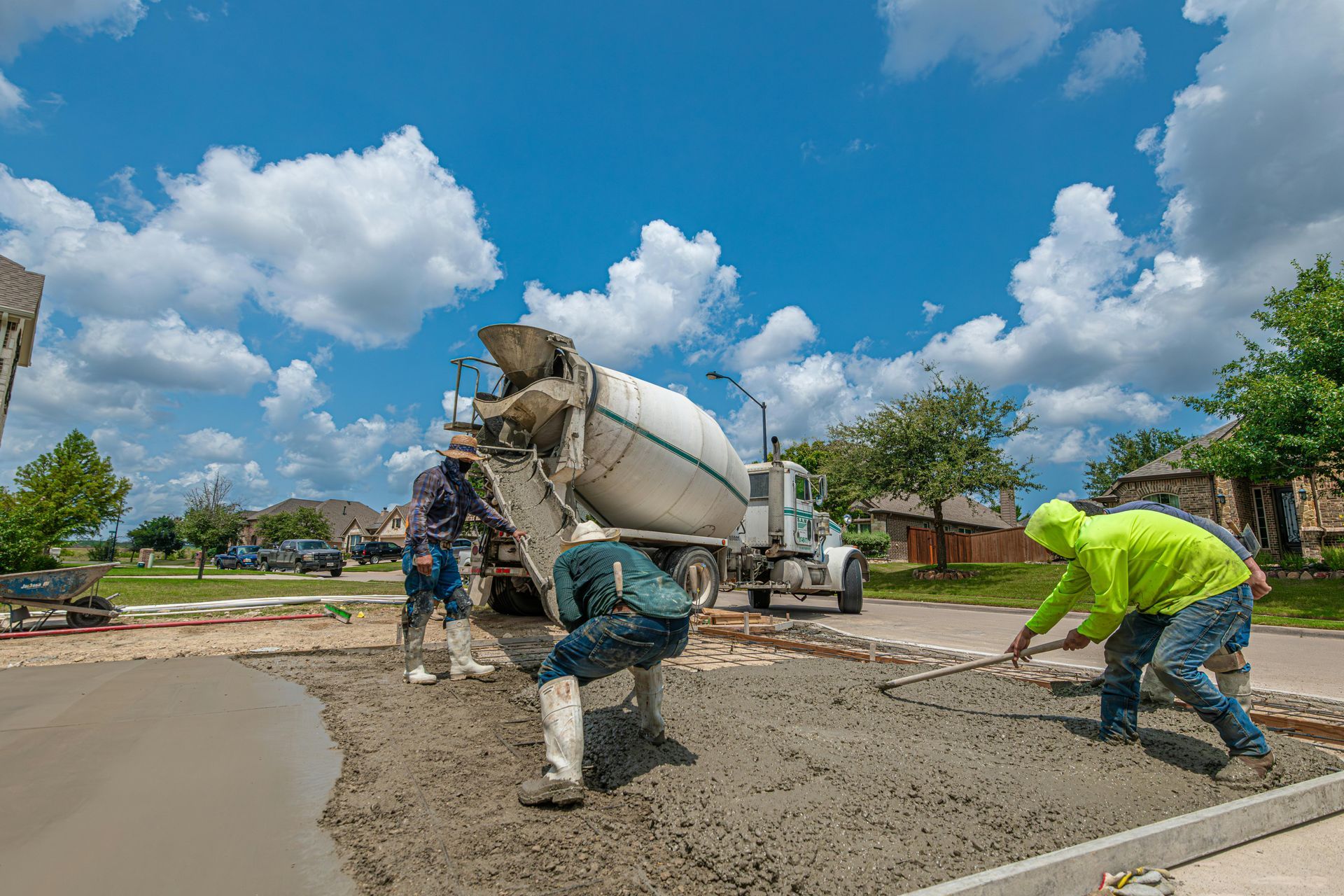
Driveways Built to Survive Winter Damage
Concrete Driveway Installation in Willoughby for properties experiencing surface cracking and settling from seasonal freeze-thaw exposure
Great Lakes Property Solutions installs custom concrete driveways in Willoughby designed to withstand the repetitive expansion and contraction that causes most concrete failures in Northeast Ohio. The work addresses properties where existing driveways show cracking, heaving, or surface deterioration from years of freeze-thaw cycles combined with heavy vehicle loads. Proper base preparation and grading prevent the water infiltration and soil movement that lead to premature failure in this climate.
The installation process begins with excavation and grading that establishes drainage away from structures, followed by a compacted aggregate base that remains stable through seasonal ground movement. Concrete is poured to specifications that account for vehicle weight and local weather patterns, with control joints placed to direct cracking to predetermined locations rather than allowing random fractures across the surface. Finish options include broom texture for traction in snow and ice, stamped patterns for appearance, or decorative treatments that maintain functionality.
Schedule a property evaluation to assess grading requirements and base conditions for your specific site.
What Proper Base Preparation Prevents Long-Term
Base preparation determines whether a driveway lasts fifteen years or needs repair within five. The aggregate base layer must be compacted in lifts to create a stable platform that doesn't shift when groundwater moves through seasonal freeze-thaw cycles. Without adequate compaction and proper depth, voids form beneath the slab as soil settles, leaving concrete unsupported and vulnerable to cracking under vehicle weight.
After installation, you'll notice that the surface sheds water toward drainage areas rather than pooling in low spots, and the driveway remains level without the dips and heaves that develop when base material wasn't properly prepared. Control joints create clean, straight lines where the concrete can move slightly during temperature changes, preventing the random spiderweb cracks that appear when slabs are poured without planned relief points. The broom finish provides traction even when snow melts and refreezes, and vehicle traffic doesn't cause surface spalling or edge breakdown.
Ohio freeze-thaw cycles create more concrete failures than anywhere else in the installation process, which is why the base must extend below frost depth and grading must move water away from the slab before it can freeze and expand beneath the surface. Decorative finishes are applied during the finishing stage while concrete is still workable, and sealing is completed after the curing period to protect against salt and moisture penetration.

What Property Owners Usually Ask
Questions about concrete driveways often focus on durability, finish options, and how Northeast Ohio weather affects long-term performance.
- What preparation work happens before concrete is poured? Excavation removes unstable soil, grading establishes drainage patterns, and aggregate base material is spread in layers and compacted with mechanical equipment to create a stable foundation that resists settlement and frost heaving.
- How does Ohio freeze-thaw cycle affect concrete driveways? Water that seeps into small cracks or beneath the slab expands when it freezes, creating pressure that causes cracking, heaving, and surface deterioration, which is why proper base depth, grading, and control joints are critical in Willoughby installations.
- What finish options work best for snow and ice conditions? Broom finish creates texture that provides traction when surfaces are wet or icy, while stamped and decorative finishes can be textured similarly but require sealing to prevent moisture infiltration that leads to surface damage during winter months.
- When should control joints be placed in the concrete? Control joints are cut or formed at intervals based on slab thickness and are positioned to direct cracking to predetermined locations, typically spacing them at distances equal to two to three times the slab thickness in feet.
- How long before the driveway can handle vehicle traffic? Concrete reaches sufficient strength for light vehicle traffic within seven days under normal conditions, but full curing takes 28 days, and heavy loads or aggressive use should be avoided during the initial curing period to prevent surface damage.
Great Lakes Property Solutions works with property owners to design driveways that handle both the vehicle loads and the seasonal weather conditions specific to Northeast Ohio. Request a detailed estimate based on your site grading and base preparation requirements.