
Structures Designed for Heavy Load Cycles
Commercial Concrete Installation in Willoughby for industrial sites and businesses requiring reinforced surfaces that withstand sustained traffic
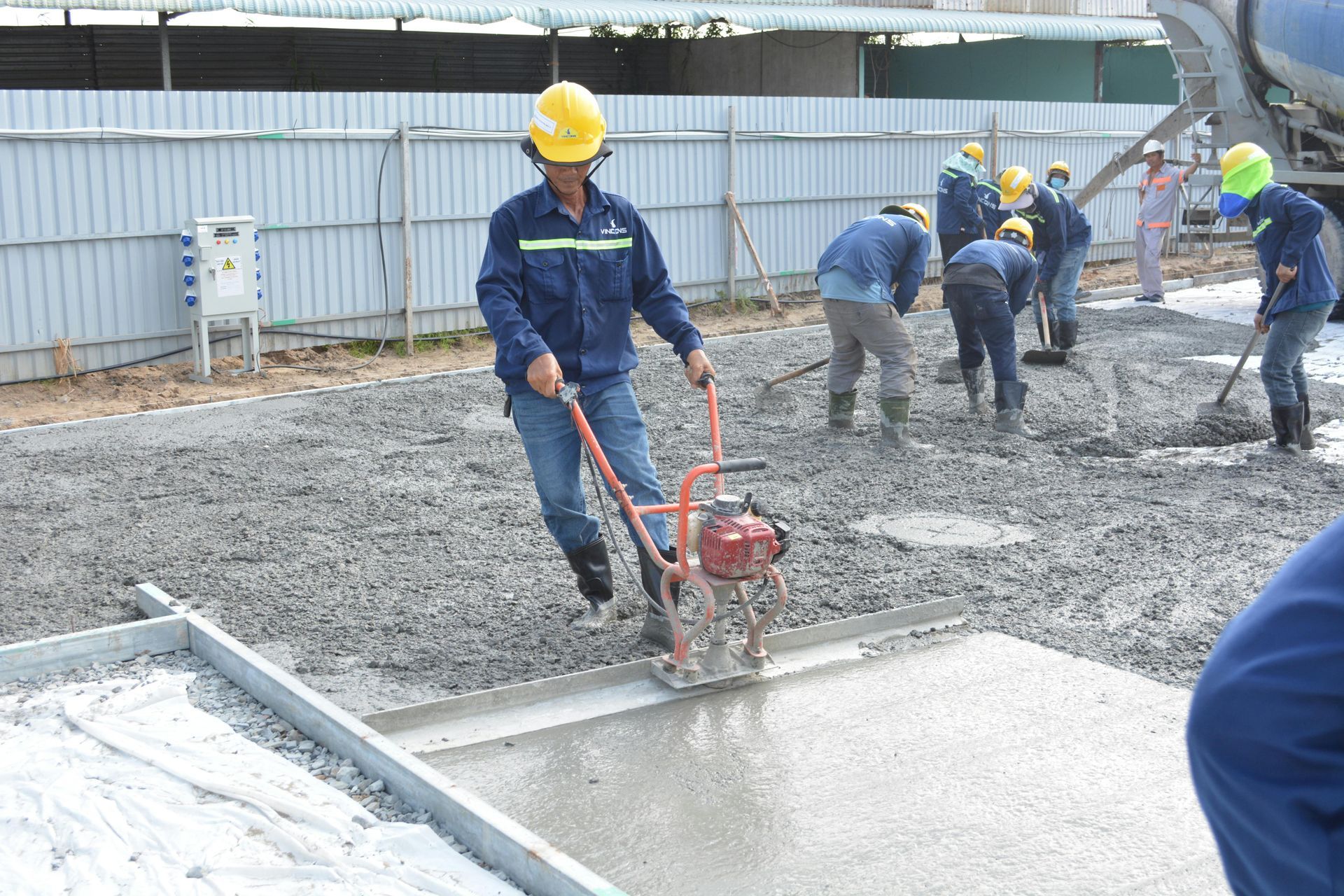
Loading areas crack and industrial sidewalks develop surface spalling when concrete isn't engineered for the repetitive stress of forklifts, delivery trucks, and pallet jacks. Great Lakes Property Solutions installs commercial concrete in Willoughby for parking lots, foundations, loading zones, and pedestrian pathways where standard residential specifications fail under commercial use patterns. The work involves calculating load requirements, reinforcing slabs to distribute weight, and finishing surfaces to meet safety codes while resisting the abrasion that comes from constant vehicle movement and material handling equipment.
Commercial installations require thicker pours than residential work, typically six to eight inches depending on expected loads, with rebar or wire mesh reinforcement positioned to handle tensile stress. The base preparation includes deeper aggregate layers compacted to higher density standards, and the concrete mix itself often incorporates additives that improve strength and reduce permeability. Finishing techniques vary by application: loading docks receive broom finishes for traction under all weather conditions, while interior floors may get power-troweled surfaces that resist dust generation in warehouse environments.
Arrange an on-site consultation to review your facility's traffic patterns and determine the reinforcement specifications your project requires.
How Reinforced Concrete Handles Commercial Loads
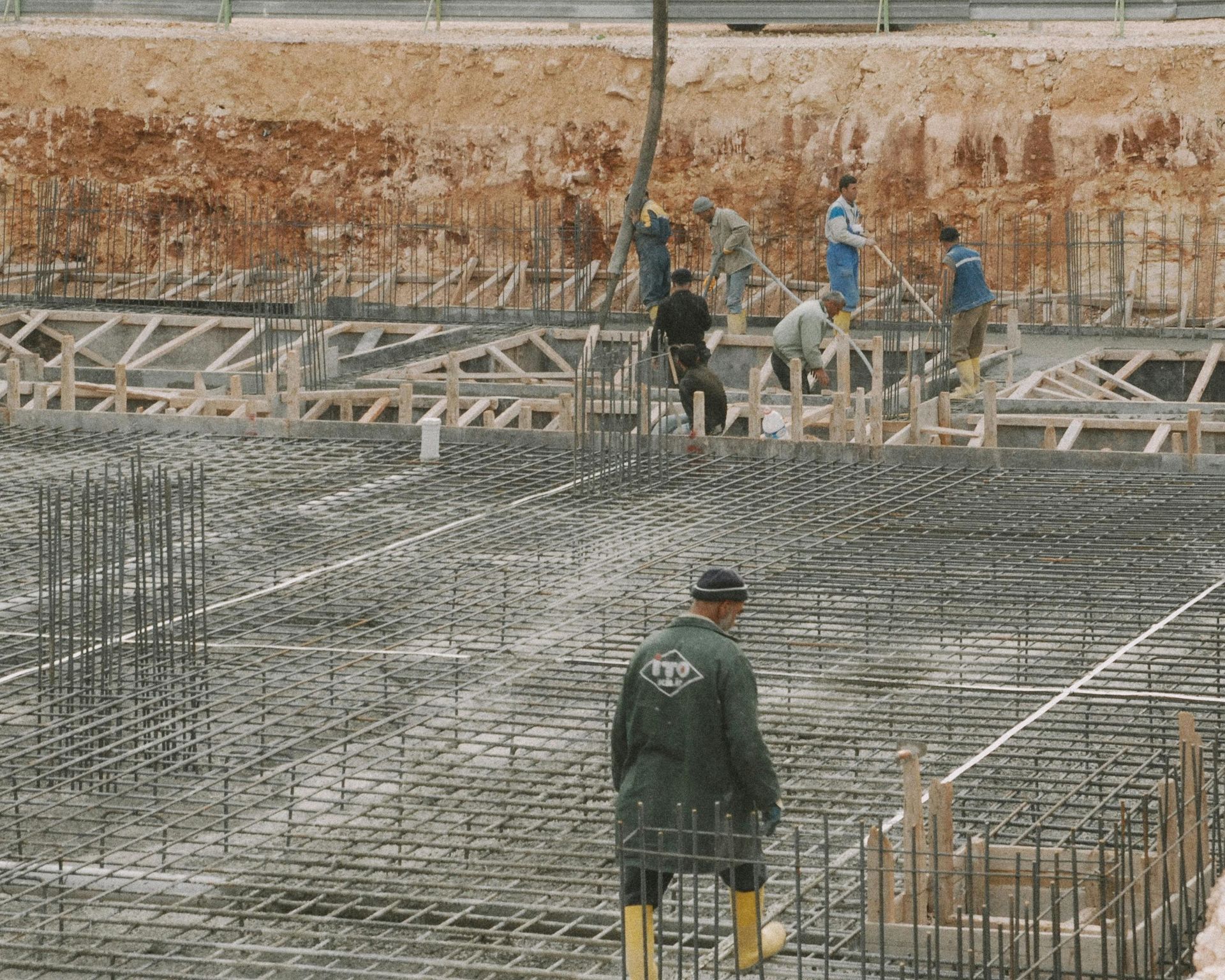
Reinforcement placement within the slab controls where cracking occurs and prevents the structural failure that happens when unreinforced concrete experiences point loads from heavy equipment. Rebar grids are positioned in the lower third of the slab thickness to handle tensile forces, and control joints are cut at closer intervals than residential work to manage the stress from thermal expansion across large surface areas. Proper grading directs water away from building foundations and toward drainage infrastructure, which prevents the undermining that occurs when runoff erodes base materials beneath the slab.
Once installation is complete, your facility gains surfaces that support fully loaded delivery vehicles without deflection, and forklift traffic no longer creates the rutting and edge breakdown common with asphalt in high-use areas. Joints remain tight and level, eliminating the trip hazards that develop when adjacent slabs settle at different rates. The surface resists oil staining better than untreated concrete, and the hardened finish sheds water quickly to reduce slip risks during Ohio's wet seasons.
Commercial projects often require coordination with existing operations to minimize downtime, which may involve phased construction that keeps portions of your facility accessible throughout installation. Compliance with ADA slope requirements, local building codes, and stormwater management regulations is integrated into the grading and finishing process.
Answers to Frequent Commercial Concrete Questions
Commercial property managers need to understand how concrete specifications, curing times, and site logistics affect both project costs and long-term maintenance requirements.
- What makes commercial concrete different from residential installation? Commercial concrete uses higher-strength mixes, thicker pours, and deliberate reinforcement placement to handle the repetitive loading that comes from delivery vehicles, forklifts, and heavy foot traffic. The specifications account for point loads rather than distributed weight, which requires engineering that prevents cracking under concentrated stress.
- How long before installed concrete can handle vehicle traffic? Light vehicle traffic can resume after seven days once the concrete reaches approximately 70 percent of its design strength, but full curing takes 28 days. Heavy equipment and loaded trucks should avoid new concrete until full strength is achieved to prevent surface damage and internal cracking that shortens service life.
- Why do commercial parking lots require specific drainage integration? Willoughby's freeze-thaw cycles make standing water particularly destructive to concrete surfaces, as repeated freezing expands trapped moisture and causes spalling and cracking. Commercial installations incorporate catch basins, trench drains, and deliberate grading to direct runoff away from high-traffic areas and building foundations.
- What finishing options work best for loading areas versus pedestrian walkways? Loading docks and areas exposed to forklift traffic receive broom finishes that provide traction without creating rough textures that accelerate tire wear, while pedestrian sidewalks use smoother finishes that meet ADA requirements and reduce trip hazards while still providing adequate slip resistance.
- How does reinforcement affect the longevity of commercial concrete? Rebar or wire mesh reinforcement doesn't prevent cracking entirely but controls crack width and location so the slab maintains structural integrity even as thermal expansion and contraction create stress. Unreinforced slabs develop wider cracks that allow water infiltration and lead to base erosion that causes slab failure.
Great Lakes Property Solutions coordinates material delivery, site access, and curing schedules to minimize disruption to your operations. Schedule an evaluation to review your facility's specific load requirements and site conditions.